Digital Marketing Skills Students Can Develop: A Guide for Hoshiarpur Students
Part 1
A friend of yours runs a small Instagram page selling handmade bracelets. She posts every day, but orders come in only now and then. Another page, selling almost the same thing, gets steady enquiries every week. The products look similar. The prices are close. So what’s the difference?
Usually, it’s a handful of marketing skills. The second page knows who it’s talking to, writes captions that make people stop scrolling, uses the right hashtags and keywords, and checks which posts actually bring customers. None of that is magic, and none of it needs a special degree. It can all be learned.
If you’re a student in Hoshiarpur wondering where to begin with digital marketing, this guide breaks it into skills you can build one at a time.
What Digital Marketing Actually Means
Digital marketing is the work of helping people find a business, trust it and buy from it, using online channels. Those channels include search engines like Google, social media platforms, email, websites and online ads.
Think of a local shop with a signboard, a few posters and word of mouth. Digital marketing is the online version of all that, with one big difference: you can measure it. You can see how many people saw an ad, how many clicked and how many actually enquired. That measurability is what makes it a skill you can improve with practice.
Why Skills Matter More Than Tools
Beginners often start by asking, “Which tool should I learn?” It’s a natural question, since new platforms and AI tools appear constantly. But tools change every year. The skills underneath stay much the same.
Understanding a customer, writing a clear message, choosing the right channel and checking the results will help you whether the platform is Instagram today or something new tomorrow. So this guide focuses on skills first. Tools come after.
Skill 1: Understanding the Audience
Every good campaign begins with one question: who are we trying to reach? A coaching institute speaks to Class 12 students and their parents. A boutique speaks to women looking for outfits for weddings and festivals. A clinic speaks to families who want a doctor they can trust nearby.
Learning to understand an audience means asking practical things. What problem do they have? What do they search for? What worries them before they buy? Where do they spend time online? A student who gets into the habit of asking these questions writes better content and runs better ads, because the message fits the person reading it.
A simple exercise: pick a local business and write a short profile of its ideal customer, including age, interests, worries and the questions they’d type into Google. Doing this for a few businesses builds the skill quickly.
Skill 2: Writing Clear, Persuasive Content
Almost all digital marketing relies on words. Captions, blog posts, ad copy, email subject lines and website text all need to be clear and convincing.
Good marketing writing is simple. It speaks directly to the reader, says what the offer is, explains why it matters and tells people what to do next. Avoid long, heavy sentences. Avoid jargon unless your audience uses it. And be honest, because exaggerated claims lose trust quickly.
Practice by rewriting. Take a dull caption from any local business page and write three better versions. Compare which one you’d actually stop to read. Over time, you’ll notice patterns in what works.
Skill 3: SEO, Helping People Find You on Google
SEO stands for Search Engine Optimization. It’s the practice of making a website or page show up when people search for something related to it.
At beginner level, SEO involves a few clear ideas. Keyword research means finding the words people actually type, such as “digital marketing course in Hoshiarpur” instead of a vague phrase. On-page SEO means using those keywords naturally in titles, headings and content, along with clear page descriptions. Local SEO means setting up and maintaining a Google Business Profile, collecting genuine reviews and keeping a business’s name, address and phone number consistent online.
Search is also changing, with AI-generated answers appearing in results. That makes clear, honest, useful content even more important, because it’s the kind of content search tools tend to trust and quote.
Skill 4: Social Media Marketing
Social media is where many students start, because they already use these platforms. But using Instagram for fun is different from using it for a business.
Marketing skills here include planning content around a purpose, choosing the right format such as reels, carousels or stories, writing hooks that grab attention in the first second, using hashtags sensibly and replying to comments and messages. It also means knowing that each platform behaves differently. Instagram suits visual content, LinkedIn suits professional audiences and Facebook still reaches a wide local audience, especially older users.
A useful habit is to study pages you admire. Notice what they post, how often, and which posts get the most response. Then try a small version of the same idea for a real or practice page.
Skill 5: Basic Design and Visual Thinking
You don’t need to become a professional designer, but a basic sense of visuals helps a lot. People judge a post in about a second, and a messy design tells them to scroll on.
Learn a few simple principles: keep layouts clean, use no more than two or three fonts, choose colors that match the brand, leave breathing space around text and make sure the main message is readable on a small phone screen. Free tools like Canva make this accessible, and many beginners create decent posters and social posts within a few weeks of practice.
The goal isn’t fancy design. It’s clear, consistent visuals that make a business look reliable.
A Common Doubt: “Do I Need to Be Creative or Good at Tech?”
Many students hold back because they think digital marketing is only for creative or highly technical people. The reality sits somewhere in between.
Some parts are creative, like writing captions or designing posts. Other parts are analytical, like checking numbers and deciding what to change. Most people are stronger in one area than the other, and that’s fine. You can build the weaker side with practice. Many successful marketers started out thinking they weren’t creative or weren’t good with numbers, and learned both through doing real work.
What matters more than natural talent is curiosity and consistency. If you enjoy noticing why one post works and another doesn’t, you already have the right instincts.
Why This Matters for Students in Hoshiarpur
Businesses around Hoshiarpur, including clinics, institutes, boutiques, restaurants, real estate dealers and manufacturers, are steadily moving online. Many know they should be visible on Google and Instagram, but they don’t have the time or the know-how to manage it.
That creates a real opening for students. You don’t need to move to a big city to find work. Local businesses need people who understand marketing and care about results, and there’s often less competition locally than in crowded metro markets
Part 2
Skill 6: Paid Advertising Basics
Organic posts take time to build reach. Paid ads let a business put its message in front of a chosen audience much faster, which is why small businesses use them often.
At beginner level, learn how platforms like Meta (Facebook and Instagram) and Google Ads work. Understand the basic campaign goals, such as getting messages, leads or website visits. Learn how audience targeting works, including location, age and interests. Understand how a budget is set and what happens when you change it. And learn what makes an ad creative effective: a clear image or video, a short message and one simple call to action.
Be careful with real money. Practice with very small budgets, or with a business owner’s permission and clear limits. A beginner who tests small, watches the results and adjusts will learn much more than one who spends big and hopes for the best.
Skill 7: Understanding Basic Analytics
Digital marketing is measurable, but only if you look at the numbers. Analytics means checking what happened and asking why.
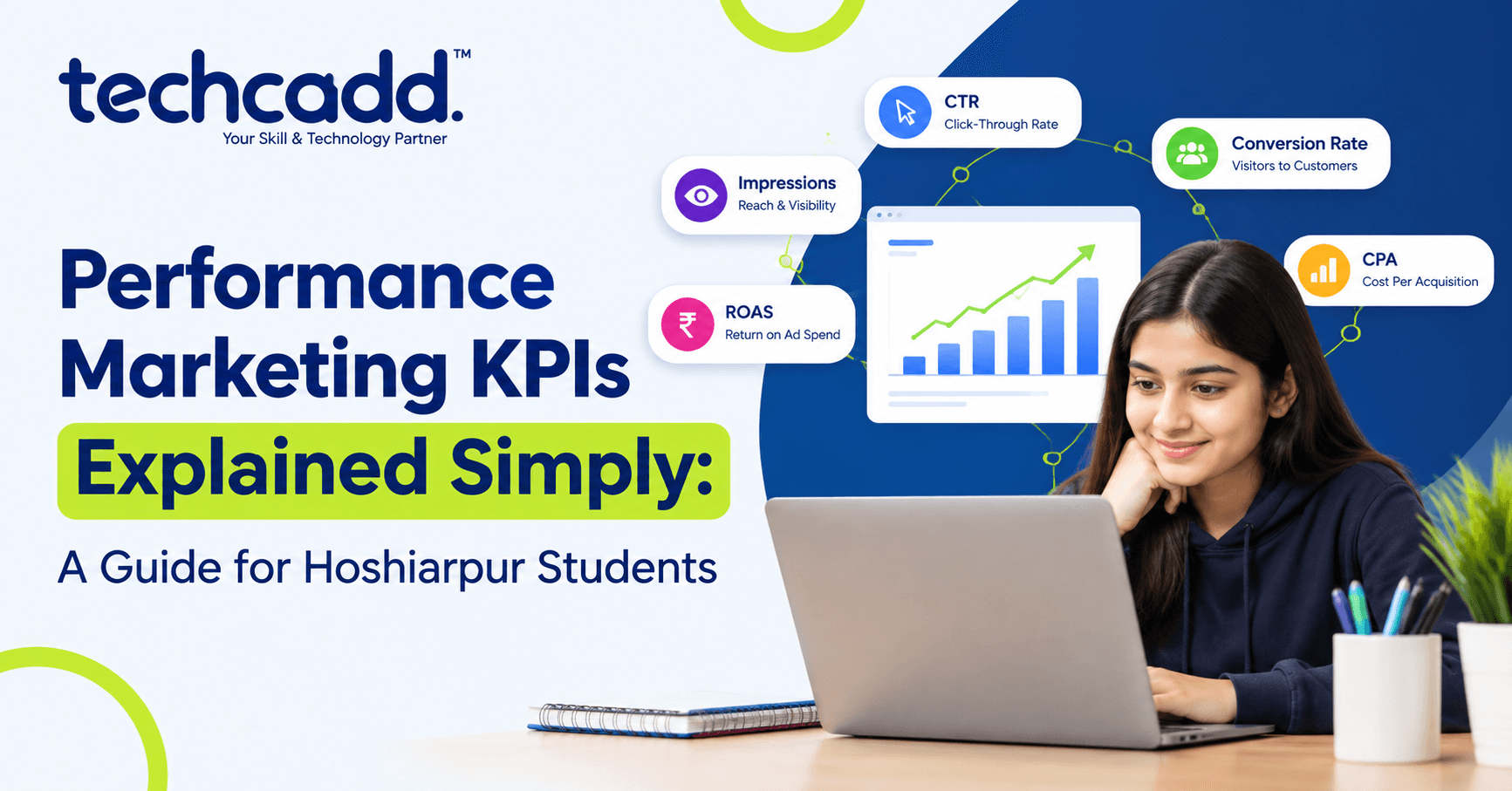
Start with a few simple measures. Reach and impressions show how many people saw your content. Clicks and click-through rate show how many were interested enough to act. Conversions show how many did what you wanted, like filling a form or sending a WhatsApp message. Cost per lead shows how much each enquiry cost.
You don’t need advanced tools at first. The insights sections inside Instagram, Facebook, Google Business Profile and Google Ads are enough. The real skill is interpreting the numbers: if many people see a post but few click, maybe the message or image is weak. If many click but few enquire, maybe the landing page or offer needs work.
Skill 8: Email and WhatsApp Marketing
Not every customer is found through social media or search. Email and WhatsApp let a business stay in touch with people who’ve already shown interest.
Skills here include writing short, useful messages, choosing a good subject line, segmenting contacts by interest and sending at sensible times. For WhatsApp in particular, learn to use WhatsApp Business features like catalogs, quick replies and broadcast lists properly, and always respect permission. Sending constant unwanted messages annoys people and can get a number blocked or restricted.
For a local business, a simple monthly message about an offer, an event or a helpful tip can bring back customers who might otherwise forget about it.
Skill 9: Content Planning and Consistency
Posting randomly rarely works. Successful pages plan what they share and keep going over time.
Learn to build a simple content calendar. Decide how often you’ll post, what types of content you’ll mix, such as educational posts, behind-the-scenes, customer stories and offers, and which days work best. Plan around festivals, exam seasons and local events that matter to your audience. Then batch your work, so you create several posts in one session instead of scrambling every day.
Consistency matters because audiences and algorithms both reward steady activity. A page that posts well three times a week for six months usually beats one that posts daily for two weeks and disappears.
Skill 10: Using AI Tools Sensibly
AI tools can now help with brainstorming ideas, drafting captions, summarizing research, suggesting keywords and editing text. Used well, they save real time.
Used carelessly, they create bland, repetitive content that sounds like everyone else’s. They can also state wrong facts confidently. A sensible habit is to treat AI as a fast assistant. Ask it for options, then edit heavily. Add your own examples, local details and honest opinions. Check every claim, price and statistic before publishing. And never paste confidential client information into a tool without knowing the rules.
Students who combine solid marketing basics with careful AI use tend to produce more work and better work than those who rely on either alone.
Skill 11: Communication and Client Handling
Many students overlook this one. If you work with real businesses, whether as an intern, a freelancer or an employee, how you communicate matters as much as how well you market.
Learn to listen to what the owner actually wants, explain your plan in simple language, set realistic expectations and report progress honestly. If results are slow, say so and explain what you’ll try next. Avoid promising guaranteed rankings or sales, because no honest marketer can guarantee them.
Clear communication builds trust, and trust is what turns a first small project into repeat work and referrals.
How These Skills Work Together
None of these skills stands alone. Audience understanding shapes the message. The message becomes content. Design and SEO make that content easier to notice and find. Ads and social media spread it. Email and WhatsApp bring people back. Analytics shows what worked, and that feeds back into the next round of audience understanding.
Picture a local coaching institute running an admission campaign. You research parents’ worries, write a few helpful posts, design clean graphics, optimize the Google Business Profile, run a small ad for enquiries, follow up through WhatsApp and check which posts brought calls. Each skill supports the others, and weakness in one slows the whole chain.
Common Mistakes Beginners Make
Mistake 1: Chasing followers instead of customers
A large follower count looks impressive, but it doesn’t pay bills. Focus on enquiries, visits and sales.
Mistake 2: Jumping into ads without understanding the audience
Money spent on a poorly targeted ad disappears quickly. Know who you’re speaking to first.
Mistake 3: Copying competitors without thinking
Studying others is useful, but copying their content word for word doesn’t build a brand or earn trust.
Mistake 4: Ignoring the numbers
Posting without checking results means you never learn what works. Review your insights regularly.
Mistake 5: Trying every platform at once
Spreading yourself thin leads to weak results everywhere. Start with one or two platforms that suit the audience and do them well.
Mistake 6: Over-promising to clients
Guaranteed results are a red flag. Honest, realistic promises build longer relationships.
Mistake 7: Relying on AI without editing
Unedited AI content is often generic and sometimes wrong. Always add your own judgment.
Is This Suitable for Complete Beginners?
Yes. Digital marketing is one of the more beginner-friendly fields because you can start practicing immediately, with your own page, a friend’s business or a practice project. You don’t need expensive software or a technical degree. You need curiosity, patience and a willingness to test, learn and adjust.
Do You Need Previous Experience?
No. Students from commerce, arts, science and every other stream enter digital marketing successfully. If you already create content, edit videos or manage a college society’s page, you have a head start. If not, you can begin with the basics and learn through small projects.
What Should You Learn First?
Here’s a sensible order:
Basic marketing ideas, such as audience, offer and message
Writing clear, persuasive content
Social media basics, on one or two platforms
Simple design, using beginner-friendly tools
SEO fundamentals and Google Business Profile
Content planning and consistency
Basic analytics, to read what your posts and ads are doing
Paid ads, with small test budgets
Email and WhatsApp marketing
AI tools, used as helpers
Client communication and reporting
This order builds understanding first and spending second, which is what makes you useful and safe to a real business.
Part 3
How These Skills Play Out for Businesses Around Hoshiarpur
Think about the businesses you pass on a normal day in Hoshiarpur. A coaching institute with admission season coming up. A boutique preparing for the wedding rush. A clinic that wants more patients to find it on Google Maps. A restaurant that wants more weekend bookings. A property dealer who gets enquiries from people living abroad.
Almost every one of them has the same problem. They know they should be visible online, but nobody on the team has the time or the know-how to manage it properly. Their Instagram page goes quiet for weeks. Their Google listing has an old phone number. Their last ad was boosted with one tap and never checked.
That’s where a student with practical skills fits in. You don’t need to promise miracles. You can start with small, useful jobs: fixing a Google Business Profile, planning a month of posts, designing clean graphics, or running a small enquiry campaign with a clear budget. Business owners notice when someone is careful, honest and follows up.
How Difficult Is It, Really?
Let’s be honest. The basics of digital marketing are easy to start and hard to master. You can set up a page and publish a post in an afternoon. Getting steady, measurable results takes testing, patience and a willingness to be wrong sometimes.
The first month usually feels confusing. There are many platforms, a lot of new terms, and everyone online seems to have a different opinion on what works. Your first few posts may get almost no response, and your first ad may bring clicks but no enquiries. That’s normal, and it’s how the learning happens. Each result, good or bad, tells you something about the audience.
What makes it manageable is going one skill at a time. Work on writing before you worry about ads. Learn to read basic numbers before you try complicated reports. Small, steady improvements add up faster than you’d expect.
A Simple Four-Week Practice Plan
If you’d like a structure, here’s a plan that assumes about forty-five minutes a day.
Week 1: Understand the audience and the message
Pick one local business, real or imaginary. Write a short profile of its ideal customer. Draft ten captions and choose the three strongest.
Week 2: Set up and create
Create or tidy up a social page for that business. Design five simple posts using a free tool. Set up a basic content calendar for the month.
Week 3: Get found
Research ten keywords people might use to search for the business. Write a short, clear description for a Google Business Profile. Plan a few posts around those keywords and local events.
Week 4: Measure and improve
Publish your posts and check the insights after a few days. Note which ones got the most views, saves or messages. Write a short summary of what worked, what didn’t and what you’d change next.
At the end of the month, you’ll have a small case study, which is far more convincing than a certificate alone.
Build a Small Portfolio
Employers and clients want evidence. A simple portfolio helps you stand out, even without work experience.
Include two or three projects. These can be practice pages, college society accounts, or a small business that agreed to let you help. For each, show what the goal was, what you did and what changed. Screenshots of well-designed posts, a before-and-after of a Google profile, or a short note on how engagement or enquiries moved are all useful. Be honest about the numbers, and don’t claim results you can’t show.
A neat, truthful portfolio tells people you know how to do the work.
What Can You Do After Developing These Skills?
Once you’re comfortable with several of these skills, a few paths open up:
Junior digital marketing roles, such as social media executive, content writer or SEO assistant at agencies and companies
Freelance work for local businesses, handling social pages, Google profiles, simple ad campaigns or content
In-house marketing support, helping a single business manage its online presence
Content creation, building an audience through reels, blogs or a YouTube channel
Specialized paths, such as SEO, paid ads, analytics or email marketing, once you find what you enjoy most
Marketing your own venture, if you start a small business or a side project
None of these is guaranteed, and results depend on your skills, consistency and the openings available. But these skills stay useful across many kinds of work.
Will These Skills Actually Help Your Career?
For marketing, media, sales and business roles, yes, and they also help in unexpected places. A person who can write clearly, understand an audience and read basic numbers is useful in almost any team.
There’s an important point about AI here. Tools can now draft captions, suggest keywords and summarize reports. That makes the basic, mechanical parts of marketing faster for everyone. What stands out now is judgment: knowing the audience, spotting a weak message, checking facts and deciding what to try next. Those are the skills in this guide, and they’re the ones tools can’t replace.
Tips to Keep Improving
Learn from real examples. Follow a few local and national brands, and notice what makes their content work or fall flat.
Test one thing at a time. Change the image, or the headline, or the posting time, but not all at once. Otherwise you won’t know what made the difference.
Keep a simple log. Note what you posted, when, and how it performed. Patterns appear quickly.
Stay honest. Don’t buy fake followers or make exaggerated claims. They damage trust and rarely help the business.
Keep up with changes. Platform features and search results change often. Spend a little time each month checking for updates.
Ask for feedback. Show your work to a trainer, a friend or a business owner and listen carefully to what they say.
A Few Honest Thoughts Before You Go
If there’s one thing to take from this guide, it’s that digital marketing isn’t about knowing every tool. It’s about a handful of skills: understanding people, writing clearly, getting found, showing up consistently and checking what worked. Tools help you do those things faster, but they don’t replace them.
Start small. Pick one skill this week and practice it on a real or practice project. Expect your early work to be rough. Keep what works, fix what doesn’t and keep going. Compare your work with your own earlier attempts, not with someone who has been doing this for five years.
You don’t need a big budget or a technical background. You need curiosity, patience and the habit of finishing what you start.
For students in Hoshiarpur looking for a practical, in-demand field where local businesses genuinely need help, digital marketing is a sensible place to begin. Build the skills one at a time, put them to work on real projects, and let your results do the talking.

Comments
Nothing here yet. Be the first to say something.