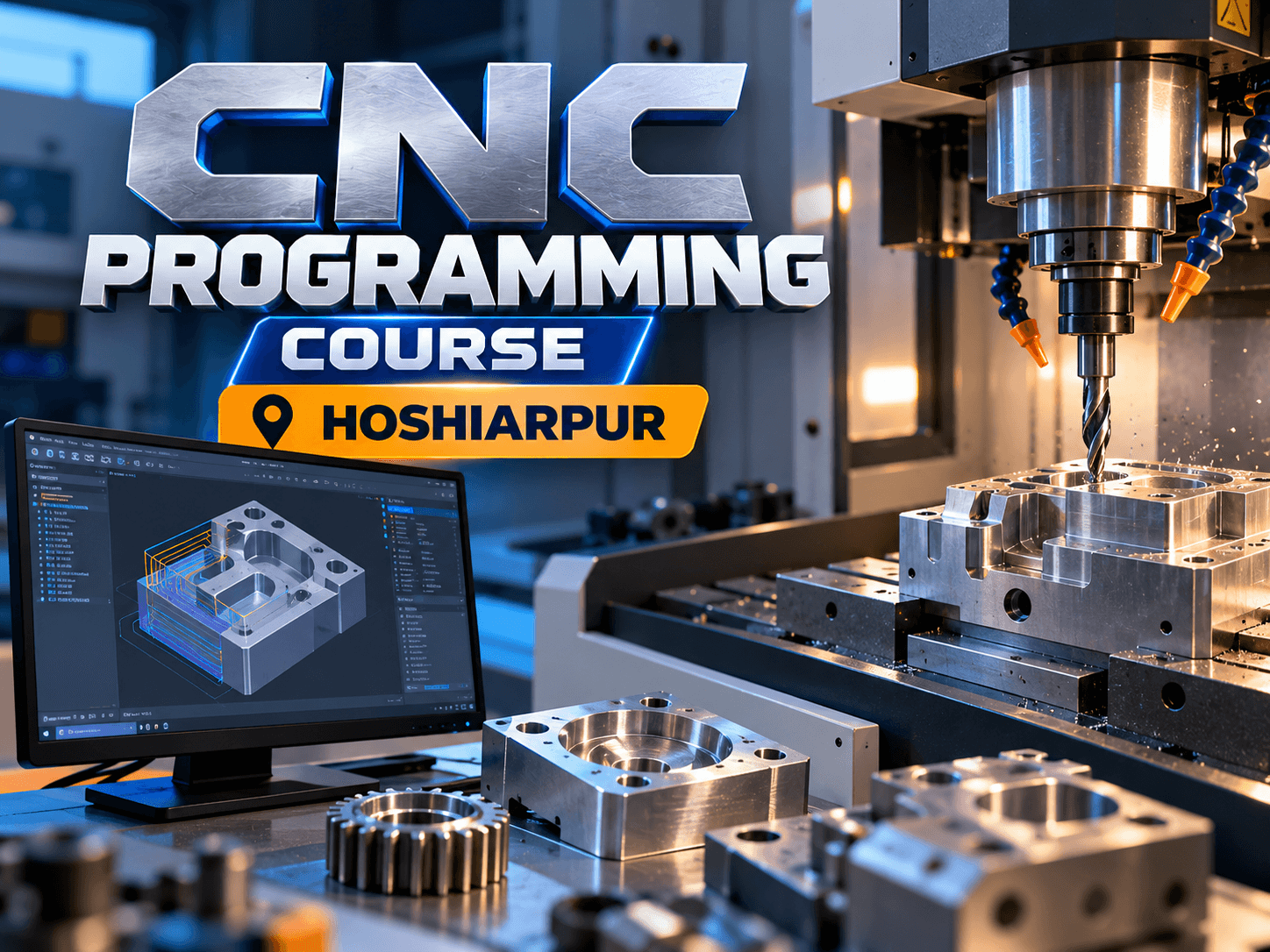
CNC Programming Course in Hoshiarpur
Computer Numerical Control (CNC) programming is an important skill in modern manufacturing, machining, and engineering industries. CNC machines use programmed instructions to control machining operations such as cutting, drilling, milling, turning, and shaping. Learning CNC programming can help students and aspiring manufacturing professionals understand how digital instructions are converted into precise machine movements.
CNC Programming Course in Hoshiarpur is designed to introduce learners to the fundamentals of CNC programming, machine operations, programming codes, and machining processes. The course can be useful for students, beginners, diploma holders, engineering learners, and individuals interested in developing technical skills related to CNC machining.
Techcadd provides CNC programming training in Hoshiarpur with a practical learning approach. Learners can explore programming concepts, understand machining processes, and practice important CNC programming techniques through structured training.
What Is CNC Programming?
CNC programming involves creating instructions that control the movement and operation of CNC machines. These instructions generally use programming codes to define movements, cutting operations, tool changes, speeds, feeds, and other machining parameters.
A CNC program can help control different machining operations by providing the machine with a sequence of instructions. Understanding these instructions is an important part of learning CNC machining.
Learners can understand:
Basic CNC programming concepts
CNC machine fundamentals
Coordinate systems
Machine axes
Programming structure
Tool movement
Basic machining operations
CNC programming codes
CNC Programming Fundamentals
Understanding the fundamentals of CNC programming helps learners build a foundation before moving toward more advanced machining concepts. CNC programming requires knowledge of coordinates, machine movements, tools, and machining operations.
Important fundamentals may include:
Absolute and incremental programming
Cartesian coordinate systems
Machine zero and work zero
Program structure
Tool positioning
Feed rate and spindle speed
Cutting movements
Tool selection
Basic machining calculations
These concepts help learners understand how programmed instructions control CNC machine operations.
G-Code and M-Code Programming
G-code and M-code are commonly used in CNC programming to provide instructions to machines. G-codes are generally associated with movements and machining functions, while M-codes can control machine-related functions.
Learners can explore:
G-code fundamentals
M-code fundamentals
Rapid movement commands
Linear interpolation
Circular interpolation
Spindle control
Coolant control
Tool-related commands
Program start and end commands
Understanding these codes can help learners read and create basic CNC programs.
CNC Machine Operations
CNC programming is closely connected with machining operations. Learners need to understand how programmed instructions relate to actual machine movements and manufacturing processes.
Training can introduce learners to operations such as:
CNC turning
CNC milling
Drilling
Facing
Grooving
Contouring
Threading
Slot machining
Cutting operations
Understanding these operations allows learners to connect programming concepts with practical machining requirements.
CNC Coordinate Systems
Coordinate systems are an important part of CNC programming because they determine the position and movement of cutting tools. Learners can understand how machine coordinates and work coordinates are used while creating programs.
Key concepts may include:
X, Y, and Z axes
Machine coordinates
Work coordinates
Reference points
Absolute coordinates
Incremental coordinates
Tool positioning
Coordinate calculations
A clear understanding of coordinates can help learners create more accurate CNC programs.
CNC Programming and Tool Path Planning
Tool path planning involves determining how a cutting tool should move during a machining operation. Proper tool movement can help in understanding machining sequences and reducing unnecessary movements.
Learners may explore:
Tool path concepts
Cutting direction
Tool positioning
Machining sequences
Tool movement planning
Feed and speed considerations
Basic tool path optimization
Safe machine movements
These concepts help learners understand how programming decisions can affect machining operations.
Practical CNC Programming Training
Practical learning can help students connect theoretical concepts with CNC programming applications. At Techcadd, CNC programming training in Hoshiarpur can focus on developing an understanding of programming concepts through examples, exercises, and practical learning activities.
Learners can work on areas such as:
Creating basic CNC programs
Understanding machining drawings
Applying G-code and M-code
Working with coordinate systems
Planning machining operations
Understanding tool movements
Practicing CNC programming exercises
Reviewing and correcting basic programming errors
Practical exercises can help learners become more familiar with CNC programming workflows.
Who Can Learn CNC Programming?
CNC Programming Course in Hoshiarpur can be useful for learners from different technical backgrounds, including:
Mechanical engineering students
Diploma students
ITI students
Engineering graduates
Manufacturing learners
CAD and CAM students
CNC machine operators
Beginners interested in machining
Professionals looking to develop CNC programming knowledge
Basic knowledge of engineering drawings or machining can be helpful, but learners can gradually develop their understanding through structured training.
Skills Learners Can Develop
Through CNC programming training, learners can work toward developing skills such as:
CNC programming fundamentals
G-code and M-code understanding
CNC machine operation concepts
Coordinate system knowledge
Tool path planning
Machining process understanding
CNC turning concepts
CNC milling concepts
Program structure and editing
Basic troubleshooting
These skills can also provide a foundation for exploring advanced CAD/CAM and CNC manufacturing technologies.
Career-Oriented Learning
CNC programming knowledge is relevant to manufacturing and engineering environments where computer-controlled machines are used for production. Learning CNC programming can help students understand the technical processes involved in CNC-based manufacturing.
Learners can explore areas related to:
CNC programming
CNC machine operation
Production and manufacturing
CAD/CAM
Tool and die manufacturing
Mechanical design
Machining processes
Industrial production
The specific skills required can vary depending on the machine type, industry, software, and job role.
Conclusion
CNC Programming Course in Hoshiarpur can help learners understand the fundamentals of CNC machines, programming codes, coordinate systems, machining operations, and tool movements. From learning G-code and M-code to understanding CNC turning, milling, and basic tool path planning, the course can provide a foundation for exploring CNC manufacturing.
Techcadd offers CNC programming training in Hoshiarpur with a practical learning approach that helps students and aspiring professionals understand programming concepts through exercises and project-oriented practice. For learners interested in mechanical engineering, manufacturing, CAD/CAM, or CNC machining, developing CNC programming skills can be a useful step toward building technical knowledge in modern manufacturing.
CNC Programming Course in Hoshiarpur
Learn CNC programming, G-code, M-code, CNC turning, milling, coordinate systems and machining concepts through practical training at Techcadd Hoshiarpur.