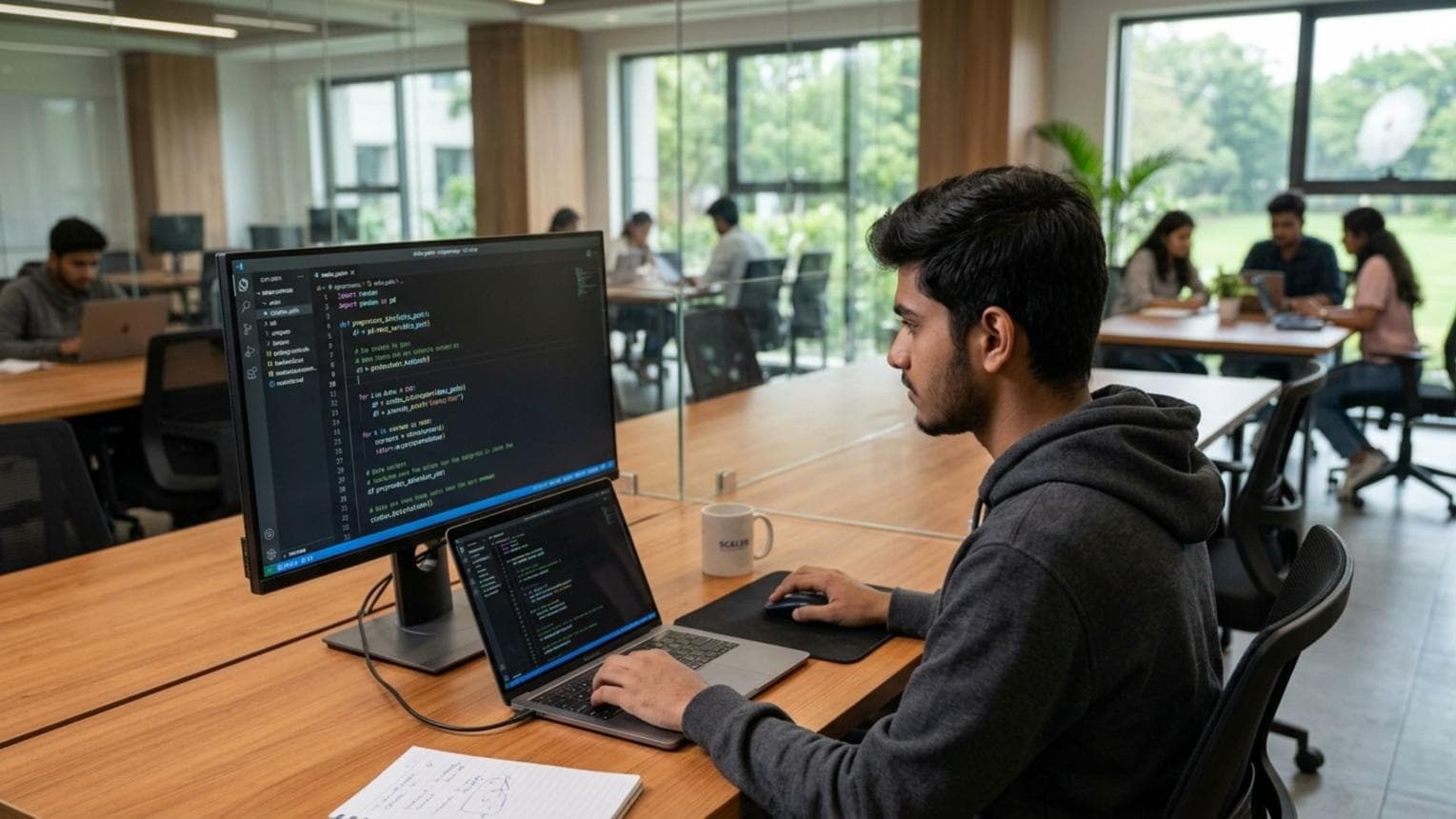
6 month Python development internship in Hoshiarpur
6 Month Python Development Internship in Hoshiarpur
Python is a widely used programming language for software development, automation, data processing, web applications, and many other technology applications. The 6 Month Python Development Internship in Hoshiarpur is designed for students, graduates, and beginners who want to develop practical programming skills and understand how software applications are built.
This programme can provide a structured learning path from Python fundamentals to application development. Learners practise writing code, solving programming problems, working with files, connecting applications to databases, and developing projects that demonstrate their skills.
What You Will Learn
Python Programming Fundamentals
Understand variables, data types, operators, conditional statements, loops, functions, lists, tuples, dictionaries, and sets. Practise writing structured and readable Python programs.
Functions and Object-Oriented Programming
Learn to organise code into reusable functions and explore classes, objects, inheritance, encapsulation, and other object-oriented programming concepts.
File Handling and Error Management
Work with text files, CSV files, file operations, exceptions, and basic debugging techniques to develop more reliable programs.
Database Connectivity
Learn SQL fundamentals and explore how Python applications interact with databases. Practise inserting, retrieving, updating, and deleting records using an appropriate database.
Automation and Scripting
Use Python to automate repetitive tasks, process files, organise data, and simplify routine computer operations.
Application Development
Apply programming concepts to practical applications. Depending on the confirmed syllabus, learners may explore APIs, web application fundamentals, or a Python framework.
Suggested Six-Month Learning Plan
Month 1: Python Fundamentals
Introduction to Python and development environments
Variables, data types, and operators
Conditional statements and loops
Basic programming exercises
Month 2: Core Python Programming
Functions and modules
Lists, dictionaries, tuples, and sets
Strings and date handling
File handling and exception handling
Month 3: Object-Oriented Programming
Classes and objects
Constructors and methods
Inheritance and encapsulation
Code organisation and debugging
Month 4: Databases and Automation
SQL and database fundamentals
Python database connectivity
CRUD operations
File processing and task automation
Month 5: Application Development
Application structure and reusable components
Working with APIs, where included
Introduction to a suitable Python framework, if part of the syllabus
Developing a small application
Month 6: Projects and Portfolio
Final project planning
Application development and testing
Documentation and debugging
Project presentation and interview preparation
This is a suggested syllabus structure and should be adjusted to match the institute's actual curriculum.
Who Can Join?
This programme may suit BCA, MCA, B.Tech, computer science, IT, and related students; eligible diploma holders; graduates; freshers; and beginners interested in programming. Learners should be willing to practise coding regularly and develop their problem-solving skills.
Practical Project Ideas
Depending on the course curriculum, learners can practise with projects such as:
Student Record Management System: Store, update, search, and manage student information.
Expense Tracker: Record expenses and generate basic summaries.
Inventory Management Application: Track products, quantities, and stock changes.
File Organisation Automation: Sort files into folders according to their type or other rules.
Contact Management System: Create and manage a searchable contact list.
Database-Driven Application: Connect a Python program to a database to manage records.
Final Python Project: Build and document an application that solves a defined problem.
Career Opportunities
After developing suitable programming skills and practical project experience, learners may explore entry-level roles such as Python Developer Trainee, Junior Python Developer, Software Development Intern, Automation Trainee, or Junior Application Developer.
More specialised roles may require additional knowledge of databases, web frameworks, APIs, testing, data structures, algorithms, or other technologies. Completing a six-month course does not guarantee employment or placement.
Why Choose a Structured Python Training Programme?
A structured programme can help learners progress through topics in sequence, practise coding regularly, receive feedback, and develop projects. Before enrolling, ask Techcadd to confirm the current syllabus, tools, practical sessions, mentor support, internship format, project requirements, and certification policy.
Frequently Asked Questions
What is the duration of the programme?
The programme title indicates six months. Confirm the class schedule and total learning hours with the institute.
Can beginners join?
Beginners can start with Python fundamentals if the programme provides introductory instruction.
Will I learn database connectivity?
Database connectivity is a useful part of Python application development. Confirm whether it is included in the current syllabus.
Will I develop projects?
The suggested course structure includes project work. Confirm the specific projects and deliverables offered by Techcadd.
What jobs can I apply for after training?
Depending on your skills and qualifications, you may explore Python trainee, junior developer, software intern, or automation-related opportunities.
Will I receive a certificate?
Confirm the certificate type, eligibility requirements, and issuing policy directly with the institute.
6 Month Python Development Internship in Hoshiarpur
Learn Python programming, object-oriented development, file handling, databases, automation, and application development through practical training and projects in Hoshiarpur.