C Programming
C from first syntax to pointers, data structures and problem solving — the base every later language builds on.
Make your entry into programming with structured C training in Hoshiarpur. You learn the C language alongside data structures and the problem-solving habits that carry into every language after it. Built for beginners: C is straightforward to learn and gives you a genuine base in programming and logical thinking.
- Category
- Programming
- Level
- Beginner
- Duration
- 3 Months
- Mode
- Online / Offline
 Introduction video coming soon
Watch Course Introduction
Watch. Learn. Code. See what it is like to learn programming here — how code is written, how concepts are explained, and how the course is structured from the first module to the last.
A short walkthrough of the syllabus, the projects you will build and how the batches are run — worth five minutes before you enrol.
Who can do this course?
The programme is built to work for people arriving from very different starting points.
Students & freshers
Get started in programming with basic programming concepts and by solving C programming problems.
BCA & MCA students
Improve your programming skills by learning C concepts and applying them to assignment work.
Aspiring developers
Develop a strong programming base that supports becoming a software developer later.
Career switchers
Get ready to enter the IT industry through the most fundamental programming language.
Programming & technology enthusiasts
Learn the basics of C to understand logic, algorithms, data structures and software development.
Why choose this program?
Six things that separate a programme you finish from one you benefit from.
- 01
Easy-to-follow program structure
Start from the basics of C and progress gradually to advanced concepts through clear explanations, coding examples and practice sessions.
- 02
Learning by coding
Learn C by writing programs, solving logical problems, working through coding exercises and practising each concept.
- 03
Strong programming knowledge
Build real understanding of variables, functions, arrays, pointers, memory, data structures and algorithms.
- 04
Project practice
Apply what you learn through practical C projects and problem-solving exercises that show how coding logic is used.
- 05
Guided learning & doubt support
Understand the harder concepts through live coding, worked examples, demonstrations and doubt-clearing sessions.
- 06
Core programming skills for careers
Gain the core skills that support internships, interviews, software development, competitive programming and advanced courses.
Course modules
12 modules, 112 sessions — sequenced so each one builds on what you just shipped.
- 12 Modules
- 3 Months
- Beginner
- Certificate Included
- Beginner
- 12 Modules
- Projects
- Certification
What this module covers
- Syntax & keywords
- Variables & data types
- Constants & operators
- Input & output
10 sessions
What you will learn
Concrete capabilities, not topics covered. Each one is demonstrated in work you keep.
- C programming fundamentals
- Conditions, loops and functions
- Arrays, strings and data handling
- Pointers, structures and memory management
- File handling, data structures and algorithms
- Practical projects and problem-solving skills
Tools & technologies you'll learn
The same tooling the teams hiring for this role use every day.
- C Programming
- Visual Studio Code
- Code::Blocks / GCC
- Git & GitHub
- Data Structures
- Algorithms
- Pointers & Memory Management
- File Handling
- SQL & Database Fundamentals
- Debugging Tools
- Command-Line Programming
- Problem-Solving Techniques
Career outcomes
After completing C Programming, these are the directions students most often take. Outcomes depend on your own work and the market — we do not promise placements or salaries.
C Programmer
Build programs, utilities, system-level applications and software solutions using C.
Software Developer
Use programming concepts, algorithms and problem-solving skills to design and develop software applications.
Embedded Systems Developer
Work on microcontrollers, hardware-oriented applications and embedded systems using C.
System Programmer
Work with low-level programming concepts, operating systems, memory management and system-oriented software.
Application Developer
Apply programming concepts to build and maintain applications across different development technologies.
Junior Software Engineer
Use C, data structures, algorithms and debugging as an entry point into software engineering.
Data Structures & Algorithms Foundation
Build a solid programming foundation and move toward software development and competitive programming.
Where the work is
- Product and agency teams
- Freelance projects
- Campus placements
- In-house roles
Where to go next
- C++ Programming
- Data structures & algorithms
- Embedded systems
- Operating systems
Industry applications
- Embedded systems
- Product engineering
- Automotive
- Consumer electronics
Hands-on projects
Every module ends in built work. These are the pieces you finish the programme holding.
Student record system
BeginnerA console application built over structures and file storage.
- C
Skills practised: Structures, File I/O, Functions
Text-based utility tool
IntermediateCommand-line parsing, dynamic memory and clean teardown.
- C
Skills practised: Pointers, Dynamic memory, Strings

Data structures workbench
IntermediateLinked lists, stacks and queues implemented and exercised against searching and sorting problems.
- C
Skills practised: Linked lists, Algorithms, Debugging
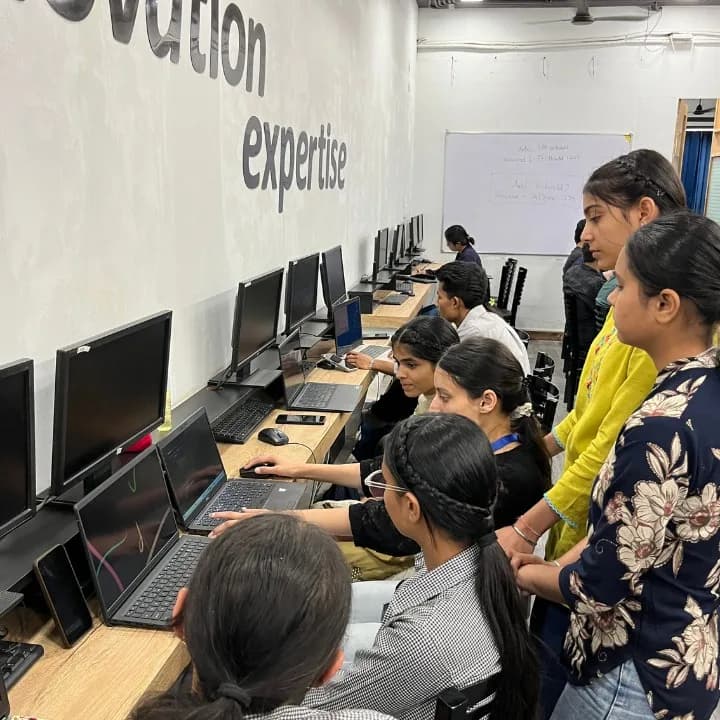
- 0+Happy Students
- 0+Industry Projects
- 0%Practical Training
- YesIndustry Experts
Why learn C programming with us?
The aim is not to get you through a syllabus but to make you comfortable writing, reading and debugging code — which is the skill every later language and every interview actually tests.
Learning through practice
Coding problems, assignments, debugging and project-based work rather than theory alone.
A program for beginners
Start with basic concepts and move gradually toward the more advanced parts of C.
Training with relevant tools
Work with VS Code, GCC, Git, GitHub and debugging tools used in real development.
Real programming projects
Build projects that strengthen logical reasoning, coding ability, debugging and your portfolio.
Guided sessions
Practical examples, live code writing, doubt clearing and continuous guidance.
Technical career skills
Programming, algorithms and problem-solving skills that support interviews, internships and further study.
Frequently asked questions
The questions counsellors are asked most about C Programming.
Yes. C Programming begins from fundamentals, and the pace is set so nothing is assumed.
Ask About C Programming
Send your question and a counsellor will call you back. No obligation to enrol.
- Live Project Training
- Internship Certificate
- Placement Assistance
- Industry Mentors
- Interview Preparation
- Online + Offline Mode
3 Months · Online / Offline
Ready to start your learning journey?
Build practical skills, work on real projects and take the next step towards your career.
Related courses
Programmes students often take alongside or after this one.
 Programming
C++ Programming
C++ from first syntax to the STL — object-oriented programming, data structures and the algorithms interviews ask about.
3 Months Programming
Java Programming
Java from first syntax to application development — object-oriented programming, data structures and practical projects.
4 Months Programming
Python
Kick start your programming career with the Best Python Training in Hoshiarpur.
3 Months Data & AI
Data Analytics
SQL, Python and dashboards that a business will actually act on.
5 Months